
Member Spotlight
Tess Cersonsky, MD
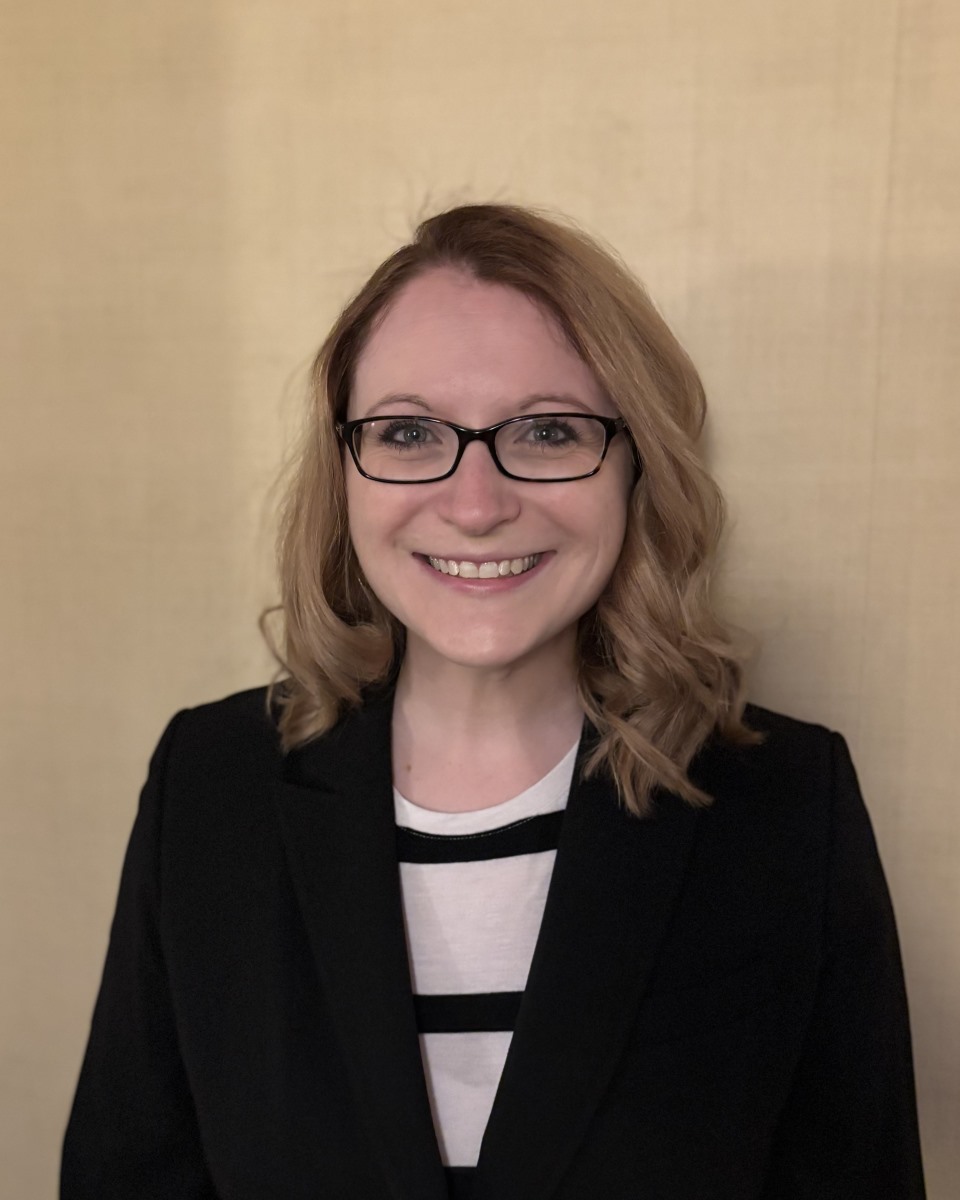 Institution: Icahn School of Medicine at Mount Sinai
Medical School: Warren Alpert Medical School of Brown University
Residency: Icahn School of Medicine at Mount Sinai
Fellowship Training Institution: To be determined!
What opportunities and experiences influenced your career path?
Obstetrics doesn’t have the luxury of being able to directly observe an organ or condition - we can’t open up a uterus mid-pregnancy and study the placenta in situ, after all! I was driven to pursue OBGYN not just because of the incredible happiness I find in caring for pregnant patients, but also because I wanted to understand the process by which a uterus and placenta work together to build an entire human being. Though I always knew I wanted to go into medicine - starting when I was a little girl playing with my dad in his pediatrics office - my path to OBGYN was circuitous.
Just like pregnancy, the brain can only be understood indirectly. In my 20s, I worked in a clinical neurology lab where I learned to harness AI to understand the depths of human cognition. I used unsupervised learning to understand profiles of cognitive decline and connect that to deep neuronal pathways, using what we knew to extrapolate what we did not. During medical school, I worked with a placental pathologist (Dr. Halit Pinar) who loves the placenta as much as I do. Pathology is the opposite of OB and neuro - you can see the granular effects a disease has on the tissue, but the clinical picture isn’t always as obvious. Dr. Pinar and I used detailed placental histological findings to predict the time at which a stillbirth occurred, giving clinicians more information to better counsel patients. Working in both fields, I learned the value of AI to model and extrapolate disease processes and novel risk factors using all types of data. I want to continue to harness machine learning to understand, predict, and prevent uteroplacental disorders, bringing AI from computer to bedside.
What has been one of your biggest professional accomplishment? If there is an article, social media post, etc. about your achievement, please include the link to that as well.
The first IUFD delivery I saw was unforgettable: the deep agony the patient felt when holding a perfect little body that would never breathe, laugh, or smile. Witnessing this event (and too many others) led me to ask how we can prevent these losses. Based on a database I curated, I developed an AI-based model to predict stillbirth risk at the time of fetal viability with greater than 85% accuracy (https://www.ajog.org/article/S0002-9378(23)00409-X/fulltext). I also want to improve equity in the patient experience by facilitating access to comprehensive workups following an IUFD. Through Mount Sinai’s Health Equity Learning track, I’ve created a thorough policy for management of IUFDs at Elmhurst Hospital, a safety net hospital where I train. The cornerstone of this policy is the creation of a perinatal bereavement clinic, providing evidence-based practices to a medically underserved population. As a provider seeing these devastating outcomes with my own patients, I am motivated to be part of the effort to reduce stillbirths.
What challenges have you faced in your career and what advice can you offer?
During college, I was diagnosed with Crohn’s disease, and since then, I’ve injected Humira every week, undergone neck surgery for related spondyloarthrosis, and fit doctors appointments and colonoscopies into a busy residency schedule. While I’m lucky that my Crohn’s is in remission, I’ve taken care of so many patients with the same disease, symptoms, and more severe presentations. I’m also lucky that I have excellent physicians, good insurance, and access to appointments. My advice to other physicians in training is to remember firstly to take care of yourself, but secondly to remember the situations that change a disease presentation beyond the medical; rather, every social support our patients need to access high-quality care and treatment.
Was there a mentor(s) and/or patient who inspired you?
I’ve always been interested in the placenta - it is a fascinating organ that connects fetus to patient, baby to mother. But I never fully appreciated the power of this organ until my patient was on the operating table for delivery in the setting of placenta percreta. Seeing that this placenta, somehow, had invaded far beyond its usual limits - into the bladder and abdominal wall - to nourish a pregnancy terrified me. How can we even begin to understand such a phenomenon? My patient also struggled to understand, but ultimately she put her trust in our team to help bring her through her pregnancy even with the implications of such a severe presentation. She inspired me to further understand placenta accreta using everything in my arsenal - machine learning, placental pathology, imaging - if only to fulfill the trust our patients put in us.
Tell us about one of your most memorable patient encounters.
I received a call from one of the MFM fellows that a patient was coming in “hot” via ambulance - thinking she was going to deliver right away. She had a history of a congenital cardiac defect and was pregnant with her 7th child, so this was not a low risk pregnancy! Knowing she could deliver any moment, the anesthesiologist and I ran down to the entrance of the hospital to meet the ambulance and climbed in to check her. Of course, she was fully dilated and needed to push. The EMTs, labor nurse, and I pushed with her - just once - to deliver a healthy boy in the back of this ambulance. She called me months later remembering this as her calmest, best delivery - despite no anesthesia, no bed; it was just me and her nurse in an ambulance!
What has SMFM meant to you both professionally and personally?
I love how SMFM brings together people from around the world with a focus on working together to improve pregnancy care. SMFM has offered me so many opportunities - from exciting research and professional opportunities at the annual pregnancy meeting to engagement in clinical informatics through the SMFM Clinical Informatics Committee. Getting to work with others in this field has opened my eyes to how informatics can provide more equitable and accessible care to patients nationally. I’m amazed at the impact we can have through publication of opinions and creation of smartphrases alone. Personally, I’ve loved seeing mentors and colleagues from all parts of the country at the annual meeting and sharing in personal and professional accomplishments.
What are you currently reading or listening to?
If you asked my colleagues my favorite music to listen to in the OR, you’d hear a lot of oldies - Billy Joel, Queen, the Beatles. I was probably meant to be born in the 1960s based on my musical tastes, and my colleagues laugh at how little I know of music today! Otherwise I love classical music, particularly Beethoven and Schubert, to sing and to listen.
If you could live anywhere in the world, where would it be and why?
I recently visited Vienna for the first time and was able to attend Viennese opera - a lifelong dream of mine. As a classically-trained singer, I had dreamed of seeing opera in the home of classical music. I would love to live there and see a new opera every night! More realistically, living in the same state as my husband, a neurologist in Boston (while I train in New York City), would be incredible.
If you had to live one day in your life over and over (think 1993 film Groundhogs Day) which day would you pick?
This year for my birthday I convinced one of my colleagues to swap shifts with me so that I could cover the labor floor. It’s truly my happiest place, from the patients to the incredible attendings I learn from. This day did not disappoint - I came in and performed a forceps-assisted delivery with a pudendal block, my first time learning this technique. This was followed by cake and birthday celebrations with my friends and colleagues on the floor. If I could relive that day - performing advanced obstetric techniques to help patients have healthy deliveries and eating delicious birthday cake - I happily would!