
Hypertension in Pregnancy and Postpartum: Expanding Education and Prevention Efforts to Save Lives
By: Briana Lucido, MPH; Taylor Streeter, MPH; and Francesca Montalto, MPH
Only three weeks after giving birth, one of the most joyous moments of her life, Shalon MauRene Irving, PhD, MPH, MS, a public health leader and epidemiologist with the Centers for Disease Control and Prevention (CDC), suffered a sudden cardiac arrest.
In January 2017, Dr. Irving welcomed her newborn daughter, Soleil, into the world but shortly after, began feeling distressed and unwell. Despite seeking care multiple times, her ongoing and persistent symptoms were repeatedly dismissed and she was told that they were part of being a new mom and to "give it time.’’
After experiencing severe high blood pressure (hypertension), headaches, and swelling, Dr. Irving died on January 24, 2017, from preventable postpartum complications related to hypertensive disorders of pregnancy (HDPs).
HDPs, including preeclampsia, superimposed preeclampsia, chronic hypertension, gestational hypertension, Hemolysis, Elevated Liver enzymes and Low Platelets (HELLP) syndrome, and eclampsia, are the leading cause of maternal and infant illness and death in the United States. Worldwide, preeclampsia contributes to roughly 76,000 maternal deaths and 500,000 fetal deaths annually, yet 60 percent of these hypertension-related maternal deaths are potentially preventable.
In the US, Black women like Dr. Irving are 3 times more likely to experience maternal death and 2.1 times more likely to experience severe maternal morbidity than are white women. While these disparities can be attributed in part to income inequality and residential segregation stemming from systemic racism, racial disparities in care and health outcomes are also the result of factors such as implicit bias in the medical system.
Despite her dual PhD and her public health degrees, and her career at the CDC, Dr. Irving’s symptoms were repeatedly dismissed. The medical system failed her. Her death was preventable.
|
Managing Hypertension During Pregnancy and Postpartum Saves Lives To help prevent deaths like Dr. Irving’s, organizations from around the world recognize May as Preeclampsia Awareness Month. During this month, special attention is drawn to the life-threatening dangers of preeclampsia, a condition characterized by rapidly rising blood pressure and protein in the urine, and other HDPs. Hypertension can also occur after giving birth and if not recognized and treated effectively, can lead to complications or death. Importantly, hypertension during pregnancy or postpartum greatly increases the long-term risk of developing cardiovascular disease. |
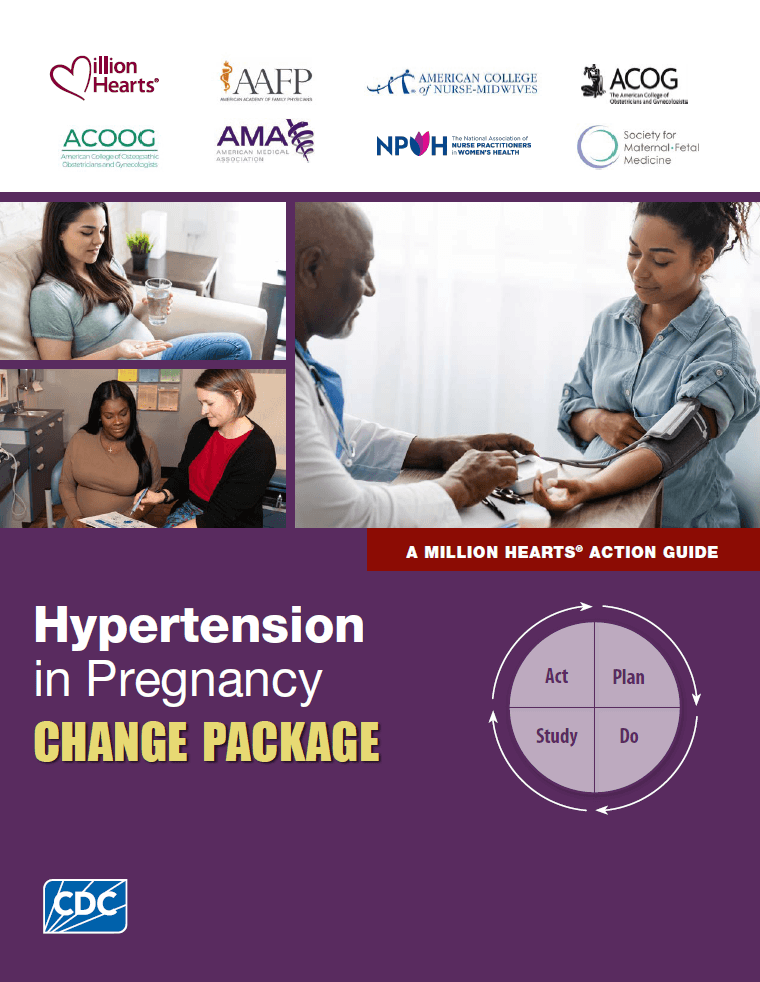 |
To improve the management of HDPs, the Society for Maternal-Fetal Medicine (SMFM) partnered with the CDC and several professional societies to develop the Hypertension in Pregnancy Change Package (HPCP). Published in May 2024, the HPCP contains strategies that health professionals can use to improve care for pregnant and postpartum patients with hypertension.
SMFM Establishes the Hypertension in Pregnancy Learning Collaborative
Last year, SMFM began enrolling hospitals, health systems, and MFM practices in the Hypertension in Pregnancy Learning Collaborative to increase collaboration and implementation of strategies from the HPCP and to improve the treatment of HDPs nationally. As of May 2026, SMFM has recruited clinicians from 103 sites in 28 states, including MFMs, obstetrician-gynecologists, nurses, and nurse practitioners who are dedicated to improving care for those experiencing hypertension during and after pregnancy.
Learning Collaborative Members Excel at Hypertension Care
Learning Collaborative participants have implemented a variety of interventions to support their pregnant and postpartum patients with HDPs, such as:
-
Providing home blood pressure monitors and enrolling pregnant and postpartum patients in remote blood pressure monitoring programs
-
Connecting patients with HDPs to primary or specialty care, such as cardiology
-
Using grant funds to provide transportation for patients living in rural areas
-
Collaborating and providing education to emergency department clinicians to help the department recognize and treat HDPs promptly and appropriately
-
Using the preeclampsia risk checklist to increase the use of low-dose aspirin for preeclampsia prevention
-
Educating patients on the warning signs of hypertensive emergencies and the impact that HDPs can have on their long-term health
-
Instituting nurse-driven protocols that allow nurses to treat severe hypertension in under 60 minutes without facing delays waiting for doctor approval
Despite their many ongoing successes, Learning Collaborative members still face challenges, from a lack of funding to difficulty instituting hypertension guidelines routinely to addressing gaps in knowledge among clinicians and patients. Throughout these challenges, Learning Collaborative members continue to work tirelessly to provide outstanding care to their patients.
“For physicians or health systems considering joining the Learning Collaborative, you’re going to find an engaging team of people that are working hard to make sure their patients get the best immediate care available. And ultimately, by participating in the Learning Collaborative, I’m confident that the care of our patients improved,” shares F.B. Will Williams, MD, MPH, a Learning Collaborative member and MFM specialist at Xavier Ochsner College of Medicine in New Orleans, LA.
SMFM plans to continue working with Learning Collaborative members to help scale their HDP interventions to improve health outcomes in the US and across the globe.
How To Get Involved
Educate Yourself and Others
There are many ways to get involved with improving care for pregnant and postpartum patients. To access SMFM tools and resources, including the Hypertension in Pregnancy Change Package, visit SMFM’s Hypertension Webpage.
Learn to Take Accurate Blood Pressure Readings
Approaches to taking blood pressure (BP) measurements vary and are often incorrect. Actions such as not sitting and resting five minutes before taking a BP measurement, having BP checked on a chair or exam table without foot and back support, and not having the arm at heart level during a BP measurement can lead to inaccurate readings. Watch this Taking Accurate Blood Pressure Readings animation to learn the correct way to check BP during pregnancy and postpartum.
Know the Warning Signs
Many people are unaware that symptoms such as severe headache, nausea, vision changes, and swelling during pregnancy or postpartum can indicate a hypertensive emergency. Watch the brief animated videos High Blood Pressure Reading with Symptoms & Seeking Immediate Medical Help and Taking Blood Pressure to Act Quickly & Advocate for You and Your Baby to learn more about the warning signs and when to seek medical attention.
Additional HDP Resources
- SMFM Special Statement: Checklist for postpartum discharge of women with hypertensive disorders
- MothertoBaby Podcast: Preeclampsia + Low Does Aspirin with Dr. Karen Florio
# # #
Briana Lucido, MPH, and Taylor Streeter, MPH, are both Managers of Public Health Initiatives at SMFM. Francesca Montalto, MPH, is a consultant to SMFM Public Health Initiatives.