
Why Funding for the MFMU Network Matters for Every Pregnant Patient
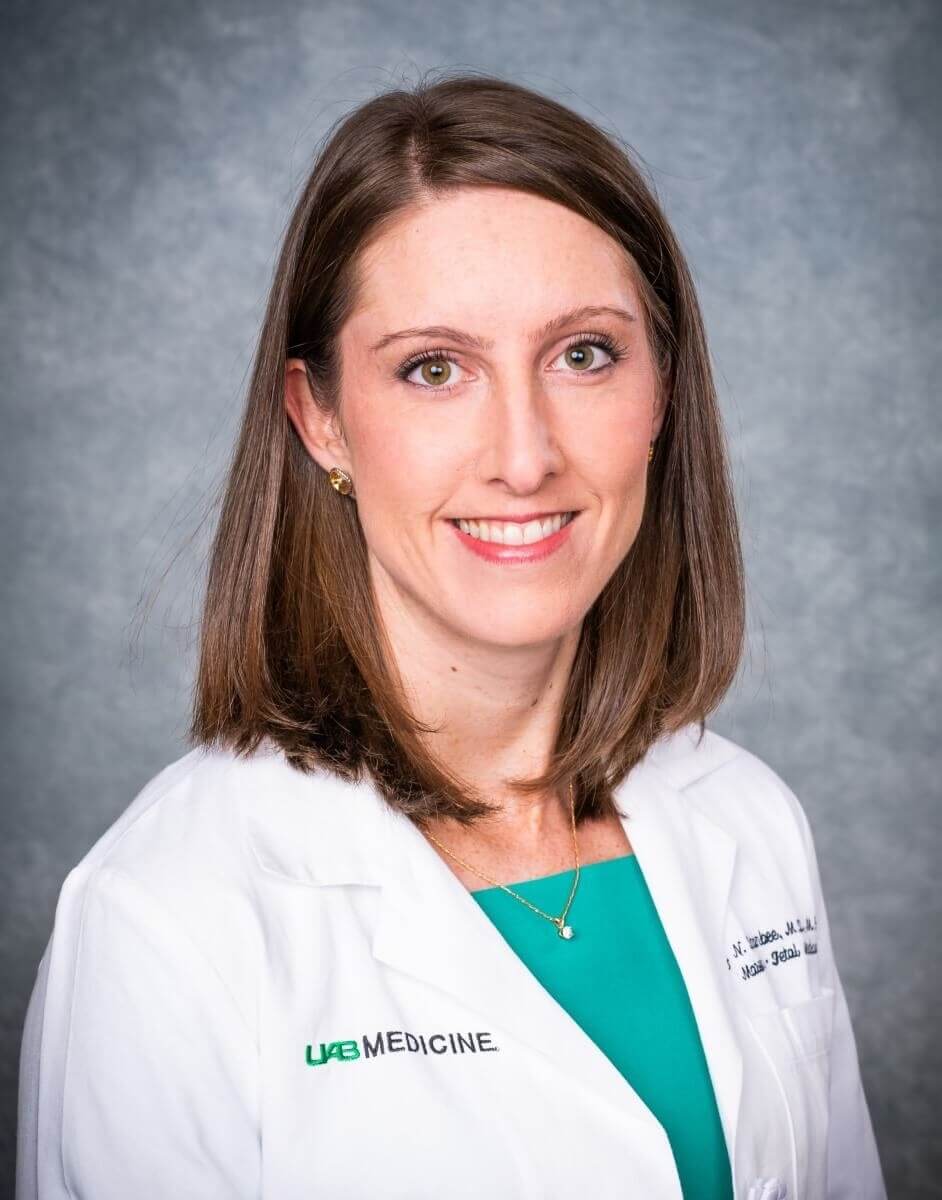
By Ashley N. Battarbee, MD, MSCR
|
I have spent my career as a maternal-fetal medicine physician trying to answer a simple question: How do we take care of our pregnant patients in a way that is backed by evidence, not just tradition? That question is harder to answer than it sounds, because pregnancy research requires studying thousands of patients in order to learn how to prevent devastating complications that may only happen in one out of every of 100 pregnancies, something no single hospital or university can do alone. This is exactly the gap the National Institute of Child Health and Human Development (NICHD)-funded Maternal-Fetal Medicine Units (MFMU) Network was built to fill. For the past four decades, it has connected academic medical centers across the country with coordinated research infrastructure, allowing us to conduct rigorous, large-scale trials that answer the questions we face as doctors every day. |
 |
A clear example of what NICHD funding makes possible is the Beneficial Effects of Antenatal Magnesium Sulfate (BEAM) Trial, a landmark MFMU Network study that asked a deceptively simple question: Could a medication given during pregnancy before a very preterm delivery protect the fetus’ developing brain?
Preterm birth before 32 weeks complicates approximately two percent of all pregnancies and carries a disproportionately high risk of cerebral palsy (CP), a permanent developmental disability affecting muscle control, balance, and posture caused by neurologic damage. Until BEAM, obstetricians had no proven way to reduce that risk. The BEAM Trial randomized over 2,000 pregnant patients at risk of delivering between 24 and 31 weeks to receive either magnesium sulfate or a placebo and then followed the babies for two years to observe their development.
This landmark research found that magnesium reduced the risk of moderate to severe CP among surviving infants by nearly 50 percent. That single trial changed obstetric practice. Magnesium sulfate for neuroprotection is now considered standard of care before a very preterm delivery, and this change happened only because a national network of hospitals, funded by NICHD, was able to enroll enough patients to answer a question that no single hospital could have answered on its own.
That is what the MFMU and other federally funded multi-site clinical trial networks makes possible — not a single study at a single hospital, but a coordinated national effort large enough to detect real differences in important health outcomes, diverse enough to reflect the patients we see every day, and rigorous enough that we can trust the results in our practice. Without it, we would be left relying on smaller, underpowered studies, expert opinion, or practices that simply carried over from one generation of doctors to the next without ever being tested.
I think about this every time I counsel a patient with threatened preterm birth. I can tell them, clearly and honestly, what the evidence shows and does not show, because that evidence exists. That is not something I take for granted.
If NICHD funding for the MFMU Network were reduced or eliminated, we would lose the ability to ask and answer these research questions at the scale pregnancy care requires. The patients who would feel that loss are not abstract. They are the mother managing chronic hypertension, the family facing a new birth defect diagnosis, the patient with type 2 diabetes trying to have a healthy pregnancy — all of them counting on their doctor to have real evidence behind their recommendations, not just a best guess.
What I want policymakers to understand is that this research is not academic in the distant sense of the word. It is the reason national recommendations for a certain treatment change, the reason a medication gets approved or taken off the market, the reason a doctor can look a patient in the eye and say, "Trust me, we know this works." That confidence is built one federally-funded trial at a time, and it is worth protecting.
# # #
Ashley N. Battarbee, MD, MSCR, an MFM subspecialist, is Associate Professor in the Department of Obstetrics and Gynecology and Director of the Center for Research in Women’s Health at the University of Alabama at Birmingham (UAB). She is the Alternate Principal Investigator for the MFMU Network at UAB. Dr. Battarbee is also a member of the SMFM Publications Committee.